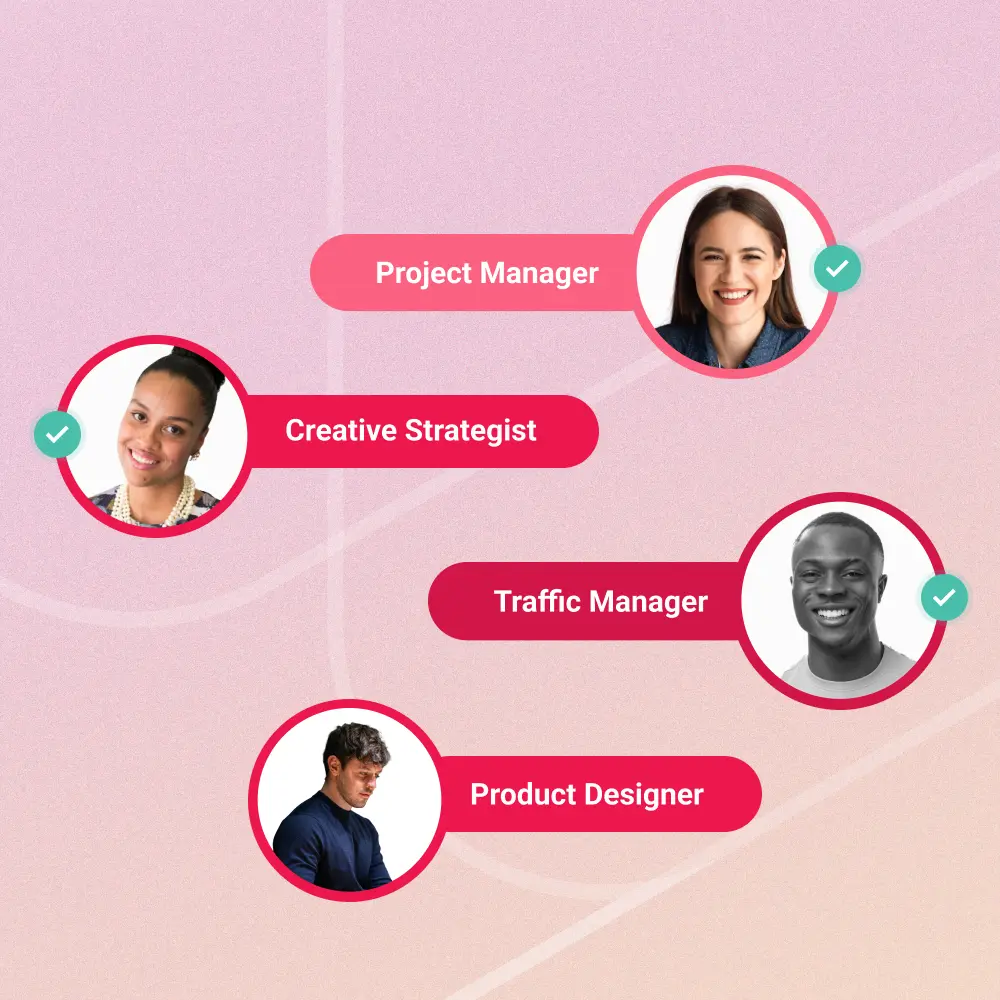
 Global



Effective resource allocation starts with an accurate view of each person's capacity, skills and existing committments. .
Matching work by capacity, expertise and priority helps reduce rework, prevent delays and distribute responsibilities more fairly.
Poor allocation affects both project profitability and team wellbeing through overtime, idle time, unplanned costs and burnout.
Resource levelling adjusts timelines when demand exceeds capacity, while resource smoothing reorganises work to protect a fixed deadline.
Real-time workload visibility, regular team check-ins and built-in capacity buffers help project managers respond to change before delivery is affected.
Mondays aren’t really great for anyone, but as a project manager, they are especially tense.
You open your laptop and hope the workload has not spiralled over the weekend. It is a specific kind of fear. You know that one surprise request or a single sick day could throw the whole week off balance.
This is the sometimes harsh reality of resource allocation.
And it’s not always the complex diagrams or the theory behind project management. Sometimes it’s the daily job of keeping things moving without burning everyone out. You have to make decisions without having all the facts. You need to be fair and sensible while everything else is about as predictable as the weather.
While the concept of resource allocation sounds simple on paper, the reality involves constant shuffling as you juggle availability and client demands. Teams get stretched, projects clash, something urgent comes up, and before long your plan looks completely different to how it started.
That’s why good allocation is about clarity rather than perfection. When you can see capacity and skills clearly then the job becomes manageable. You can protect the team and keep budgets steady without feeling like you’ve completely lost the plot.
In this article, we’re going to look at some practical strategies for professional service teams and the tools that can help. Magnetic helps by giving managers a single place to see who is doing what and where the pressure is building. But we’ll get to that much later. First let’s look at resource allocation strategies that make the process less stressful for project managers.
Resource allocation is often described as matching people to tasks and while that’s technically true, its not quite the full picture.
Resource allocation is the process of deciding how your team’s time, skills and capacity are assigned to project tasks so the work moves forward without overloading anyone.
That is the clean definition, the dictionary line, the one you’ll find on Wikipedia. But in practice, it is far more human.
It’s understanding what your team can handle, how the project is evolving and where the next flare-up might come from. It’s knowing who’s available, who’s stretched thin and which pieces of work need attention.
A strong resource allocation process gives you clarity and lets you see and plan workload into the future. It also keeps your team’s wellbeing in view which matters more than most people admit.
Resource allocation is never a one-off decision because it moves as the project moves. A client might change a deadline or a deliverable suddenly gets more complicated. Sometimes a team member gets pulled onto a higher priority job. Good project managers expect this kind of thing and build systems that adapt rather than collapse.
If you do it right, projects become easier to manage and less chaotic. Problems will still show up but you'll be more prepared to handle them.
Projects work when the right people have the time and skills to do the job. Clear resource allocation means that:
Poor resource allocation becomes expensive fast, but not always in obvious ways. When people are overloaded, mistakes start to appear and often, work needs to be redone (and we know that means money). Deadlines also start to get pushed out, clients start asking questions, and before long, you’re spending unbudgeted time on projects Sometimes you even end up pulling in freelancers at short notice which is almost always a costly exercise. On the other side of the spectrum, you might be paying for people who are sitting idle because the work has not been allocated accurately. y. Good allocation keeps you away from both extremes. It helps you stay on budget, keeps overtime under control and gives you a clearer sense of what the project is costing while it’s happening.
Most people can cope with pressure. What wears them down is disorganisation. When workloads are lopsided or expectations arrive without warning, frustration has a way of building fairly quickly. A thoughtful allocation process shows your team that their time is respected. It also stops the same person from being the automatic fallback for every stray task and gives everyone a chance to plan their week or sprint without constant disruption. That consistency makes a real difference because it builds trust, keeps stress in check and helps prevent the slow slide into burnout. People produce better work when they feel supported.
Resource allocation is one of the most direct ways a project manager shapes the success, stability and cost of a project. Once this part is handled well, everything else becomes far easier to manage.
Capacity based allocation starts with the simple question of who actually has time to take something on. Not who looks free on a spreadsheet, not who nods politely in meetings, but who genuinely has the hours available once you factor in every project, every recurring task and every inevitable interruption. When you start here, you are working with reality rather than hopeful assumptions.
With a clear view of capacity, you avoid the common trap of assigning critical tasks to the busiest people simply because they are reliable. You can also forecast more accurately because you know when the team is reaching its limit long before anyone starts slipping. This method protects timelines, steadies team pace and stops overwork from sneaking in unnoticed.
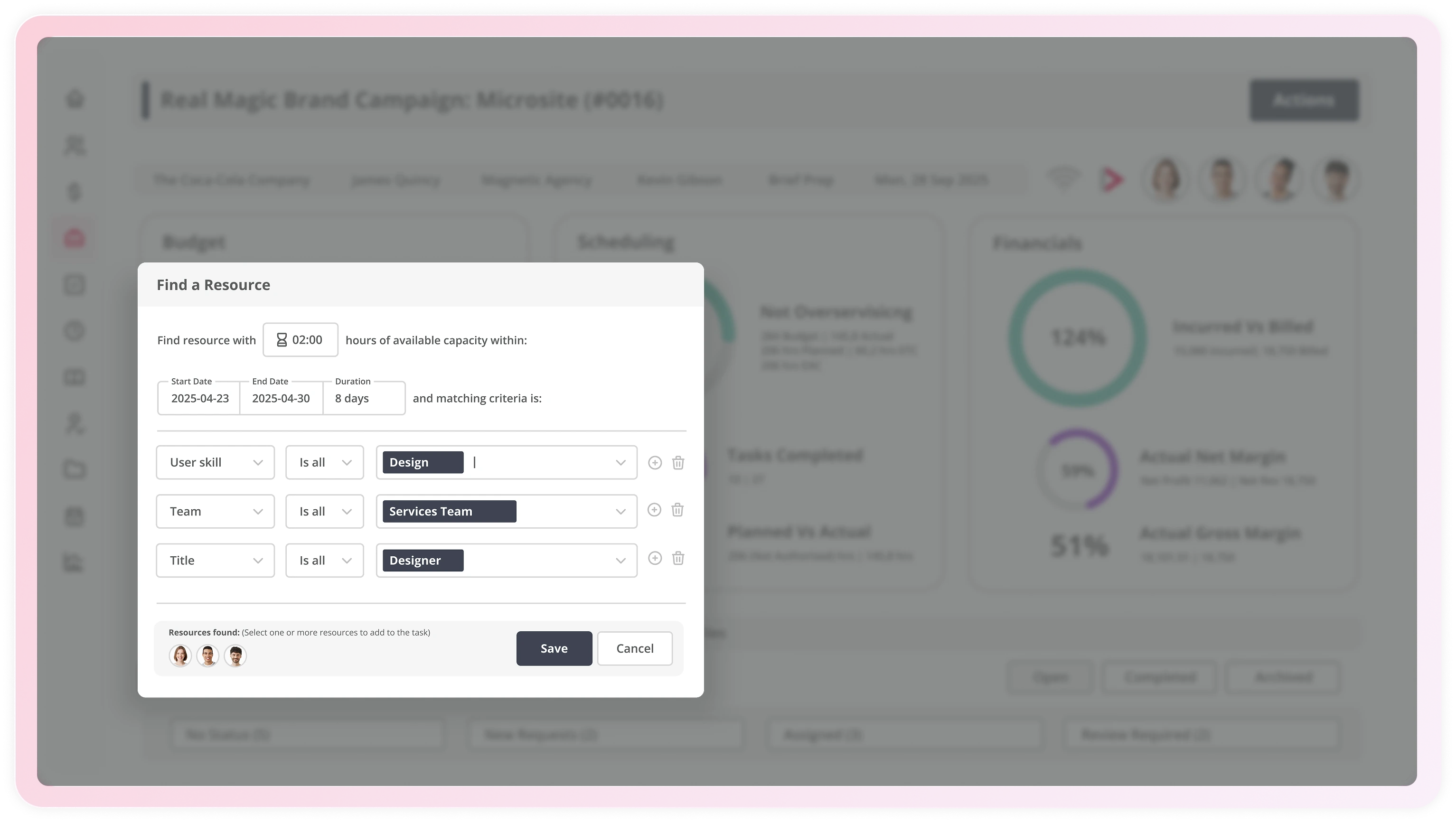
A tool like Magnetic helps by giving you a clean overview of workload across all projects so you can allocate based on available capacity rather than guesswork.
Skills based matching is about placing tasks with the people most suited to handle them. It sounds obvious, yet in practice many teams default to whoever happens to be available. Matching skills to work reduces rework, speeds up delivery and raises the overall quality of the project because the person doing the job actually knows what they are doing and enjoys doing it.
It also exposes skill gaps. If the same person keeps getting the complex assignments because no one else can, that is a cue for training, mentoring or hiring. Over time, this creates a stronger, more rounded team.
Magnetic supports this by letting you tag people by skill so you can assign work with far more intention. When the right minds meet the right tasks, the whole project moves faster and with far less friction
Priority based assignment helps you work with intention rather than urgency. Every project has tasks that move the whole thing forward and others that can wait. This strategy lines up work according to what matters most, then matches those tasks with the people best placed to deliver them quickly and cleanly.
By doing this, you avoid pouring hours into lower value tasks while high impact items sit untouched. It also helps manage stakeholder expectations because you can clearly explain why certain tasks take priority. When deadlines tighten or scope expands, priority based allocation gives you a calm, structured way to reassign work without sending the team into a tailspin.
Magnetic keeps priorities visible so you can shift workloads with confidence and transparency.
Load balancing evens out the workload before someone quietly reaches breaking point and starts having panic attacks at their desk. It is the habit of scanning your team’s responsibilities and redistributing work when one or two people are carrying the entire weight of the project on their backs.
When you balance the load, you avoid burnout, reduce errors and create a steadier rhythm for the whole project. It also makes better use of your team’s full capacity rather than relying on the same dependable few. This approach depends on visibility.
Magnetic shows you who is overbooked and who has capacity to take on more work, so you can balance workloads and maintain a healthier pace for everyone.
Contingency planning is the buffer that protects you when the sprint goes sideways. People get sick, tasks take longer than expected, clients change their mind. These are all things you should expect, plan for, and make provision for. If you don’t, even a minor disruption can send the schedule sliding.
This strategy involves keeping a bit of capacity in reserve, training your team up to do some cross-skill work, and identifying backup options (like freelancers) before you need them.
Magnetic helps by showing where extra capacity exists across the business so you can adjust quickly without pulling the project apart.
Resource leveling smooths out all those workload spikes by shifting timelines rather than stretching people to exhaustion. When you have one of those weeks where the work clearly exceeds the hours available, you adjust the schedule to create a more sustainable pace.
This strategy works well on big or complex projects where pressure comes in waves. By leveling the workload, you reduce errors, keep morale steady, and get a clearer sense of necessary delays so you can have those conversations with your clients before problems arrive.
Magnetic highlights these pressure points early which makes levelling a calm exercise rather than a frantic panic session.
Resource smoothing is the cousin of levelling. The difference is simple: with smoothing, the deadline stays fixed. You cannot move it, but you can shuffle work around it. Lower priority tasks can be shifted, broken up or reassigned so the team is not crushed while still meeting the final date.
This approach is particularly useful when you are working in industries where deadlines are immovable. Smoothing gives the team breathing room without touching the final delivery date.
Magnetic makes this workable by giving you a clear view of workload and capacity so you can make adjustments with intention rather than panic. It is a practical way to keep pressure under control without moving out deadlines.
Agile resource allocation accepts that projects evolve. Instead of locking in allocations for the entire project, you assign work in shorter sprint cycles and revisit it regularly.
This allows your team to adapt without feeling like the plan is being scrapped every few days. It also encourages collaboration because everyone reviews what is changing and what needs attention next. Agile allocation works best in fast moving environments where scope is fluid (like retainers for example).
Magnetic supports this by giving you real time visibility into progress, capacity and upcoming demands so you can reassign resources with clarity. When the work moves quickly, your allocation approach needs to move with it.
When your team is juggling projects, deadlines, and people, the tech you use matters. Magnetic is designed to give you the resource allocation clarity you need without turning you into an admin machine.
Here’s how Magnetic helps with its Resource Management features:
With Magnetic you don’t have to chase updates or squint at your screen. You get a real-time view of availability so you see who’s free, who’s booked and what’s coming up. That visibility means you won’t assign critical work to someone already over-committed.
Keep workloads balanced
It’s very easy for work to pile on some and vanish for others. Magnetic helps you redistribute the load so one person isn’t quietly drowning while another waits for their next task. Keep a steady pace not a panic sprint.
Adapt quickly when things change
Projects evolve, this is just one of those things. Things happen, people get sick, emergency leave comes up, and priorities have to shift. Magnetic gives you tools to adjust assignments, timelines and resources when the unexpected hits so you stay ahead instead of chasing tail.
Automate the admin work
Wasting time on spreadsheets and manual updates is a trap. Magnetic reduces admin by automating scheduling, time tracking and notifications so you can focus on managing the work, not the paperwork.
When resource allocation isn’t supported by good tools, you end up reacting to chaos. But the chaos can be so much more manageable. Magnetic brings all the moving parts of a project together in one place so you can allocate based on fact not instinct. The result is that projects that flow better, teams that feel less pressured and leadership that sees where the pressure points are before they become problems.
Nothing is perfect.
Even if you have a solid strategy and the right tools in place, resource allocation has a habit of getting messy. With factors like sick leave and client requests and more changes than you bargained for, challenges are bound to happen.
These are the ones project managers hit most often, and we’ve also got the practical ways to deal with them before they spiral.
A classic trap is assuming someone has time because there’s an empty block in the schedule. In reality, they might already be stretched across other projects, support requests or sneaky bits of admin nobody planned for. The solution is a living view of capacity. Talk to your team about their actual load, not just what the system says. When you allocate based on real availability, projects move more cleanly and your people feel protected rather than cornered.
When a task lands with someone who isn’t confident in that particular area, everything slows down. They need more guidance, more revisions and more emotional energy than anyone admits. The fix is keeping an honest record of skills across your team and using it to guide assignments. It doesn’t need to be perfect. You just want to increase the chances that each task goes to someone who can deliver it without too much trouble.
Projects change shape when clients add requests or something suddenly becomes more urgent than you had anticipated. The challenge is absorbing that shift without dumping mayhem onto the team. The answer is to make the priorities clear and visible priorities. When everyone knows what takes precedence, you can reshuffle calmly instead of tearing up the plan in front of everyone. A quick realignment session is often all it takes to keep the project steady.
Work rarely spreads itself out politely. It arrives in bursts that surprise everyone and wears the team down. If you spot the spikes early (for example, if you see a heavy week coming), adjust before it hits. Spread tasks, shift low priority work or bring in support. It’s far easier to prevent overload than to rebuild energy after burnout starts creeping in.
Many projects get out of control and miss deadlines because they leave no room for the unexpected. One delay triggers three more and suddenly the schedule is falling apart in front of your eyes. The fix is giving yourself a bit of breathing room. Keep some capacity aside, cross skill your team where possible and allow for small slips in your timeline. For instance, if you’ve figured out that the entire project will take eight weeks, plan for nine.
Good resource allocation is not one decision. It is a series of habits that make your projects feel calmer and more predictable. These are the practices that help project managers stay ahead of the problems rather than cleaning up after them.
Projects fall apart when you can’t see the full picture. Make visibility a non-negotiable in your process. Know who is working on what, where the pressure points sit and how much capacity exists. This lets you make better calls early instead of waiting for the warning signs to turn into real problems.
No system or tool is a replacement for real conversation, so check in with your team regularly. Ask them how the workload feels, not just whether deadlines are going to be met. Most resource problems are spotted by the people doing the work long before they appear in a schedule. Listening is one of the best safeguards you have.
Unclear priorities are responsible for a huge amount of wasted time and stress. When the team knows what matters most, they can make decisions without waiting for approval or second guessing the plan. It also makes reprioritising easier when something unexpected arrives.
Projects do not run in a straight line. If you pretend that they do, you will run into trouble. Plan for movement and build in those buffers we spoke about earlier. Flexibility is just as important as planning and it keeps you steady when the work shifts direction. In short, expect the unexpected.
Tools like Magnetic exist to take the guesswork out of resourcing. They show you capacity, skills, timelines and workloads in one view. The more clarity you have, the easier it becomes to allocate well and keep the team healthy.
Resource allocation isn’t a back office chore. It is how you keep projects moving, how teams avoid burnout and how you keep delivery predictable rather than reactionary. When you have clear visibility, the right habits and the right tools, managing projects becomes far simpler.
If you want to see how Magnetic helps you plan and schedule resources, book a demo and try it for yourself.
Get Started with Magnetic
Start a free trial and see Magnetic with your own projects. No credit card required.
Resource allocation is the process of deciding how your team’s time, skills and capacity are assigned to project work so everything moves forward without overloading anyone. It’s the foundation of keeping projects on track and teams protected from burnout.
Good allocation keeps projects predictable and avoids the classic pitfalls like missed deadlines, ballooning costs, low morale and burnout. When you have clarity on who is doing what and when, everything else becomes easier to manage.
Practical strategies include capacity based allocation, skills based matching, priority based assignment, load balancing, resource leveling, smoothing, contingency planning and agile allocation. They give you different ways to keep projects moving without relying on guesswork.
The most effective habits are visibility, early planning, keeping priorities clear and communicating with your team. Allocation isn’t a once off decision. It needs to shift as the project shifts, which is why tools and regular check-ins matter.
Magnetic gives you a real time view of capacity, workload and timelines across projects so you can assign work based on facts instead of assumptions. It helps you plan, schedule, balance workloads and adjust quickly when things change. If you want to see how it works in practice, book a demo.
More often than "when something breaks". For most teams, once a week is a good start. Block 30-45 minutes to look at the next weeks work, who's booked, who has capacity, and what's changed since you last checked. If you are in a fast moving environment (lots of client requests, retainers or last-minute work) a quick mid-week check-in helps too.
Cara Bulteel
at Magnetic
Cara Bulteel leads Customer Success for agencies at Magnetic, helping creative and professional services teams get the most out of the platform from day one. With a sharp eye for operational nuance and a deep understanding of agency workflows, she works closely with clients to ensure seamless onboarding, long-term adoption, and measurable outcomes.


Magnetic is an all-in-one workflow management platform designed and built for professional services firms.
.svg)