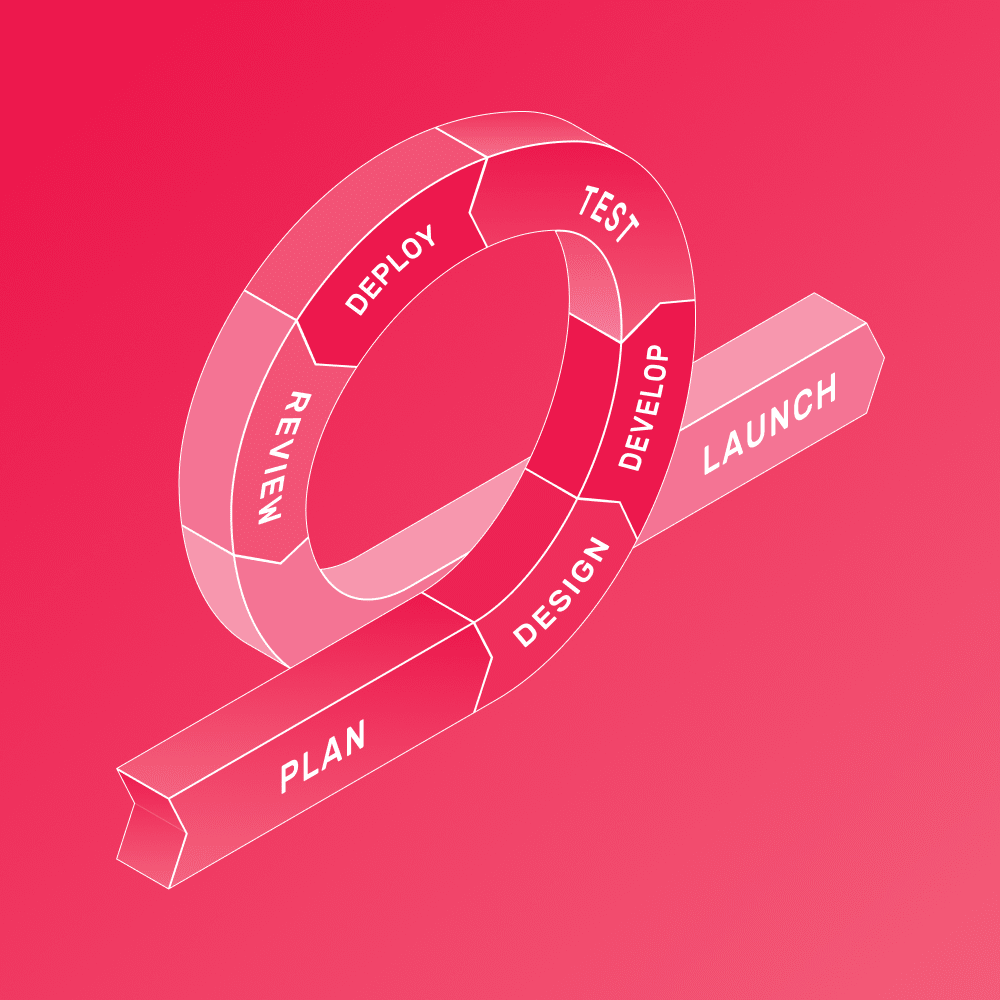
 Global



Structure not effort, drives failure: Project struggle is not a talent issue, it is a structure problem. You need an enforced framework to contain scope creep and budget leaks. .
The PLC is your Operational Blueprint: The project lifecycle provides a structured series of mandatory checks ensuring investment is validated before you move to the next phase.
Initiation and Closure, control risk: Never undervalue the early and final stages. Initiation prevents misaligned expectations and a deliberate closing phase provides knowledge for future success.
Real-time data protects Margin: Stop relying on manual spreadsheets. Integrated fiancial and timesheet data gives leadership immediate, accurate views of capacity, cash flow and hidden margin risks.
Following the Project Lifecycle: lets your team actively lead the project instead of constantly putting out fires, giving everyone an accurate view of all risk and resource needs.
When a project fail, the fault is rarely the teams effort.
The issue is almost always structure. Without a clear framework, key processes like scope control, resource allocation and budget mismanagement slowly break down. This is how small compromises build up, draining profit margins and eroding client trust.
If you want predictable success, you need a single mechanism that enforces control from the first conversation to the final handover. That mechanism is the Project Lifecycle (PLC)
The PLC is the required operational blueprint that injects rigour into every engagement. It acts as a structured series of mandatory checks, ensuring that time, money and effort are validated at every step before the project is allowed to proceed. This discipline breaks the work into five high-stakes phases:
Operating with these boundaries shifts your team from reacting to problems to actively leading the process. This structure provides leadership with a transparent, strategic view of capacity, financial risk and future resourcing needs.
The Project Lifecycle (PLC) is a framework for segmenting projects into manageable, sequential phases - from the initial conceptualisation to formal client acceptance. Its purpose is to establish a singular, shared view of the entire operational trajectory: Initiation, planning, execution, monitoring and closure. Rather than forcing teams into reactive problem-solving, the PLC implements. a logical workflow that enforces consistency.
The truth is, many organisations function using an ad-hoc version of this cycle. Issues invariable surface when practices are left uncodified: reliance on assumptions leads to misinterpretation of expectations, criplicing decision momentum and allowing stress to quietly permeate into delivery quality.
Most accepted models agree on these five core project lifecycle stages. The names may differ slightly depending on who you talk to, but the core thinking behind them is always the same:
Professional services firms rarely handle one job in isolation. You’re likely managing several clients with overlapping deadlines, shared resources acrosss multiple clients and the line between billable and non billable work is consistently blurred. Without a defined project lifecycle framework to govern project work, firms face risk:
The Project Lifecycle is an essential control mechanism that protects your firms financial interest, ensuring every decision made across each of the five phases maps directly with project scope and budget.
The Project Management Institute (PMI) offers one of the most widely accepted life cycle structures, focusing heavily on solid planning and continuous tracking. This is often used where clear consistency and accountability are absolutely vital.
But PMI isn't the only option. Different sectors adapt the life cycle to match their kind of work:
The main objective isn't to perfectly adopt a particular framework, but to select an approach that genuinely suits how your firm operates and then applying it across the board without fail.
The project life cycle isn't just unnecessary bureaucracy. It's shared understanding. When everyone knows what stage the work is in and what decisions are needed at that point, delivery becomes far calmer and protecting your profit margins becomes much easier.
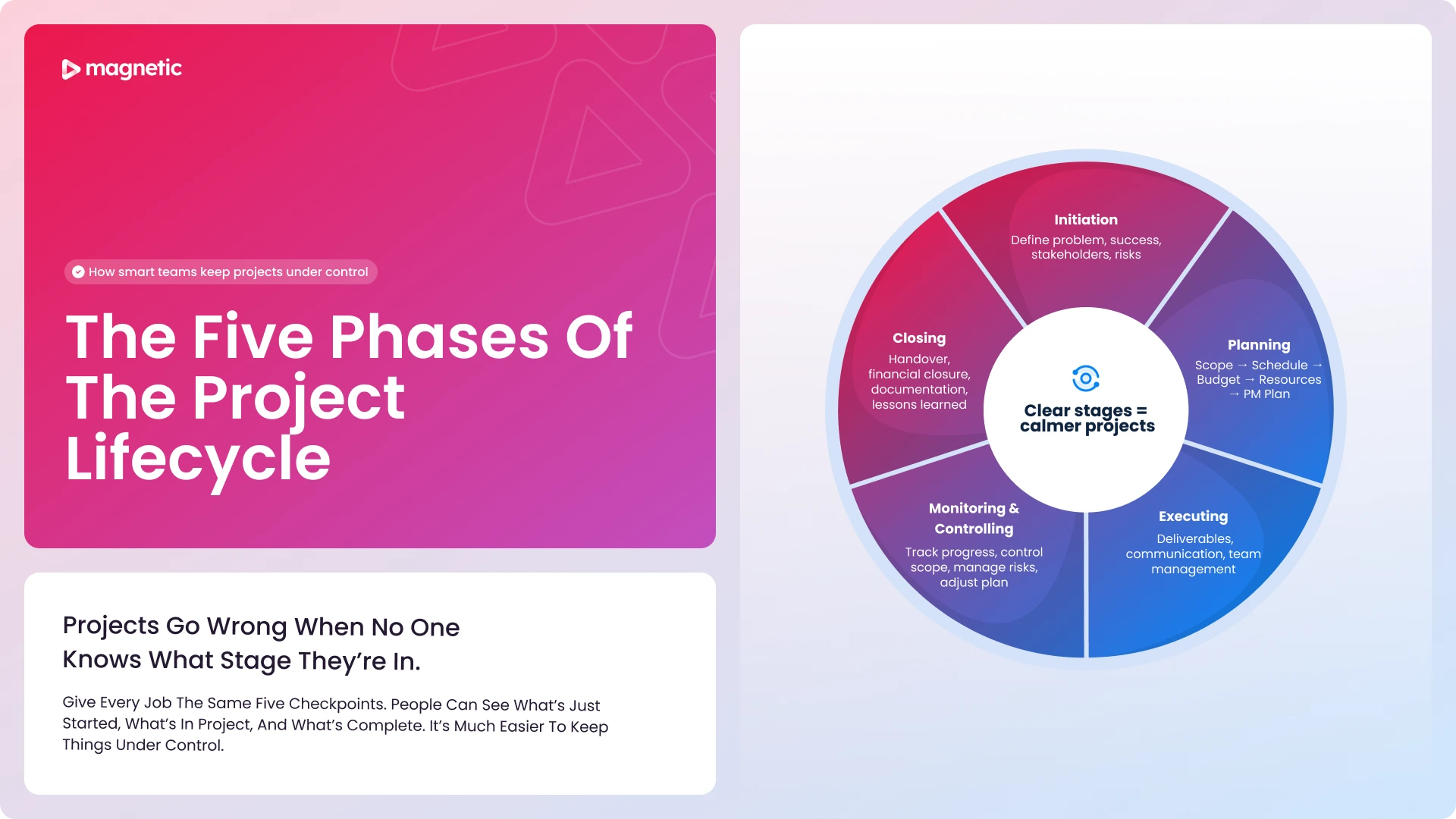
Every project begins with a moment of possibility. Someone spots a problem, a client requests something new, or the business senses an opportunity worth chasing. Initiation is where the team stops freestyling and starts defining what the project is actually about. The aim is simple: clarity. Nothing fancy, just enough understanding to decide whether the work deserves time, money, and attention.
During initiation, the team focuses on the project’s purpose.
A few practical components usually emerge at this point:
The result is usually a project charter or something close to it. The exact format is not critical, as long as it tells everyone what the project is meant to achieve and why it is worth doing. When initiation is done properly, the rest of the project life cycle feels more grounded. If you skip this part, the entire project becomes a long and tiring conversation about expectations that were never agreed on.
Once the idea passes the first test, planning is the part that turns it into something workable. This is often the most demanding stage because it requires honest thinking rather than raw enthusiasm. Planning forces teams to confront the real scope, the real timeline, and the real costs, which is where many professional service firms begin to feel the pressure.
Execution is where the project finally takes shape in the real world. Teams begin producing the actual work, clients start seeing progress, and the project manager becomes the quiet conductor keeping the whole thing moving.
Most of the effort here falls into two broad areas: delivering the work itself and keeping communication flowing. Deliverables get produced, reviewed, refined, and prepared for approval. At the same time, people need updates, decisions, clarifications, and reassurance that progress is steady.
Good team management is so important during execution. It keeps workloads balanced and helps people stay focused on the right tasks. Better still, it prevents that slow buildup of stress that can derail a well planned project.
On the comms side, you want to tick these boxes as a matter of course:
Execution also includes handling surprises. Even with a strong plan, something unexpected always arrives. A change request, a delay, a technical complication. The team should adapt, update the plan, and keep moving. By the end of this phase, the project will have produced a significant portion of its deliverables and established a clear rhythm. It is the most visible part of the project life cycle and the one clients remember most clearly.
While execution is happening, monitoring and controlling happen alongside it like a steady hand on the wheel. This phase keeps the project aligned with its original goals and prevents small issues from turning into expensive mistakes.
Monitoring focuses on tracking performance. Teams measure progress against the schedule, the budget, the scope, and any quality standards that were defined earlier. In professional services, this often includes keeping a close eye on billable utilisation, burn rate, and time spent versus time sold.
Controlling is where decisions are made. If a risk starts to materialise, the team acts. If the client requests a change, the impact is assessed before anything shifts. If delays appear, the timeline is adjusted with the right people informed.
A few consistent activities happen throughout this phase:
This phase acts as the guardrail for the entire project. Without it, projects drift until they become barely recognisable from what was agreed. With it, the team stays focused and confident, even when things become complex.
Closing is the most underestimated phase in the project life cycle. After weeks or months of effort, everyone is tempted to rush toward the finish line. But a slow, careful close is where your professionalism shines.
This phase is about handing over the final deliverables, closing the financials, and making sure the client feels confident that the project has reached its natural end. A structured handoff reduces follow up questions and protects the team from unpaid extra work disguised as small final tweaks.
Closing also has an internal purpose.
These steps strengthen future projects, especially for firms that handle similar types of work repeatedly.
The final sign off, the last invoice, the final documentation, and a sense of proper completion mark the end of the project. It is a quiet moment of satisfaction for the team and a signal that the next project can begin without old work weighing it down.
.svg) Free for 14 days | No credit card required
Free for 14 days | No credit card required
Every phase in the project life cycle comes with its own kind of pressure. Some problems show up early and are hard to miss. Others build slowly in the background while the team is focused on delivery. Being clear on the typical failure points makes the work far easier to manage.
Initiation should bring clarity, but it can also be where assumption and confusion settle in. When people believe they are aligned without actually checking, trouble builds long before the work begins.
Planning is where honesty matters most. It asks for realism about scope, time, budget, and resources, yet this is often the phase where optimism replaces truth and the project becomes stressed before it has truly begun.
Like we said up top, execution is where the project becomes real and where communication, responsibility, and decision making collide. If people aren't clear on priorities and ownership at this point, even a well written plan won't stop a project from running into trouble.
This phase is there to check whether work still matches the original scope -, but it is often the phase that gets overlooked. If you treat the absence of complaints as proof that everything is fine, misalignment builds and and only becomes visible in missed deadlines, rework or lost margin
Closing out the project should be the easy part, yet it often becomes the most complicated part of the project life cycle. By this point everyone is tired and already thinking about the next project, so loose ends multiply.
Lingering requests: Small tweaks and clarifications appear long after the project should have closed.
A well-run project is rarely the result of luck. It comes from small habits repeated consistently across every phase of the project life cycle. These practices help teams stay grounded, protect profit, and keep clients calm, even when projects get busy or unpredictable. Think of them less as rules and more as routines that make the whole cycle easier to live with.
Projects fall apart early when people rush through initiation. Taking the time to align on purpose, scope, and success criteria saves endless repair work later.
A strong start usually includes:
When everyone understands the direction, later phases feel far steadier.
Planning is where many teams try to please everyone, and the schedule becomes a fantasy. Realistic planning means acknowledging those constraints rather than pretending they will disappear.
Useful habits include:
A realistic plan is far more valuable than an impressive one.
Execution is noisy, fast moving, and yes, sometimes emotional (we’ve all been there). The best practice here is simple. Communicate more than you think you need to. Silence creates friction.
A few helpful rhythms:
Projects that communicate well rarely suffer from unnecessary drama.
Monitoring and controlling works best when it’s treated as a continuous activity rather than an occasional review. This phase protects the project from drifting away from its original intent.
Some effective habits are:
This steady oversight keeps the project in a healthy place.
By the time teams reach the end of the project management life cycle, everyone is exhausted. The temptation is to rush the closing phase, but a thoughtful close protects client relationships and future work.
A good closing phase usually includes:
The project ends cleaner, and the team begins the next one without old work hanging over them.
The best practice that ties everything together is recognising that each phase influences the next. Poor initiation leads to shaky planning. Weak planning leads to stressed execution. Lazy monitoring creates problems that surface at the worst possible time. A rushed handover leaves unresolved issues that return in the next engagement.
Viewing the project life cycle as one continuous and connected arc helps teams make better choices at every point. It encourages steadiness, clear thinking, and a calmer approach to delivery.
Magnetic gives professional services teams one place to run the entire project life cycle without switching between spreadsheets, separate project management tools and disconnected finance systems. Each feature tackles a different pressure point inside a project, and together they create a clearer, calmer way to plan, deliver, and close work, in one place.
Most projects begin long before the work is formally approved. CRM and forecasting keep the early story straight by tracking leads, past conversations, client history, expected revenue, and the likelihood that work will land. This helps teams understand what is coming and prepare for the initiation and planning stages with far more accuracy.
With a cleaner pipeline, firms can predict upcoming capacity needs, identify risky projects early, and avoid the usual panic of suddenly realising there is more work on the horizon than the team can handle.
Once the project is approved, Magnetic’s project management features become the backbone of day to day delivery. Scopes, tasks, dependencies, files, discussions, approvals, and updates all live in one place.
This supports every major phase of the project life cycle. It helps you plan and execute properly, and deliver the work exactly like you promised you would.
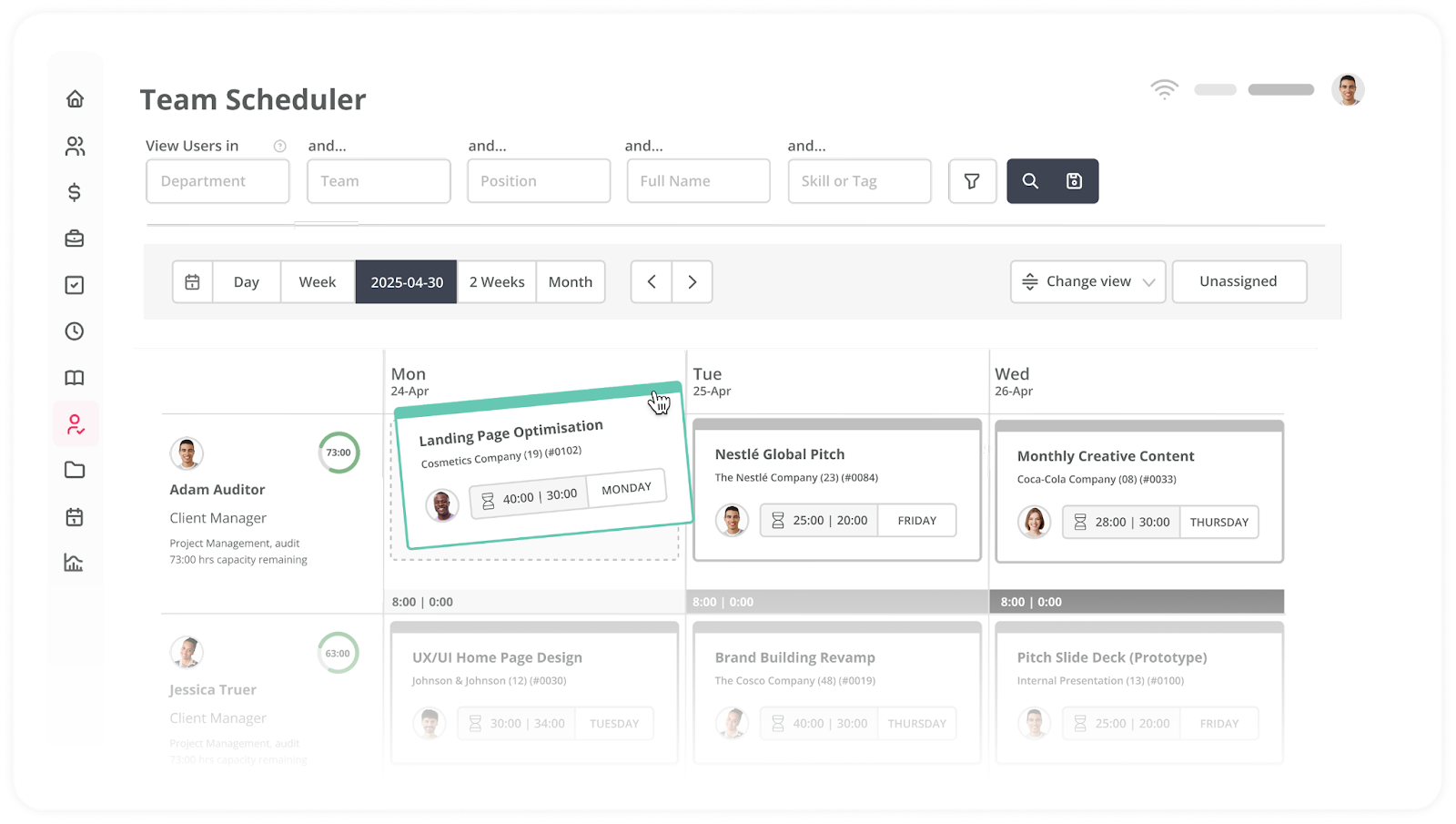
The resource management tools stop over servicing before it starts. Teams can see who is available, who is overloaded, and how capacity changes week by week. This makes planning far more realistic because deadlines are matched to actual availability rather than optimism.
It also helps during execution, because project managers can redistribute work quickly when someone becomes unavailable, preventing delivery bottlenecks.
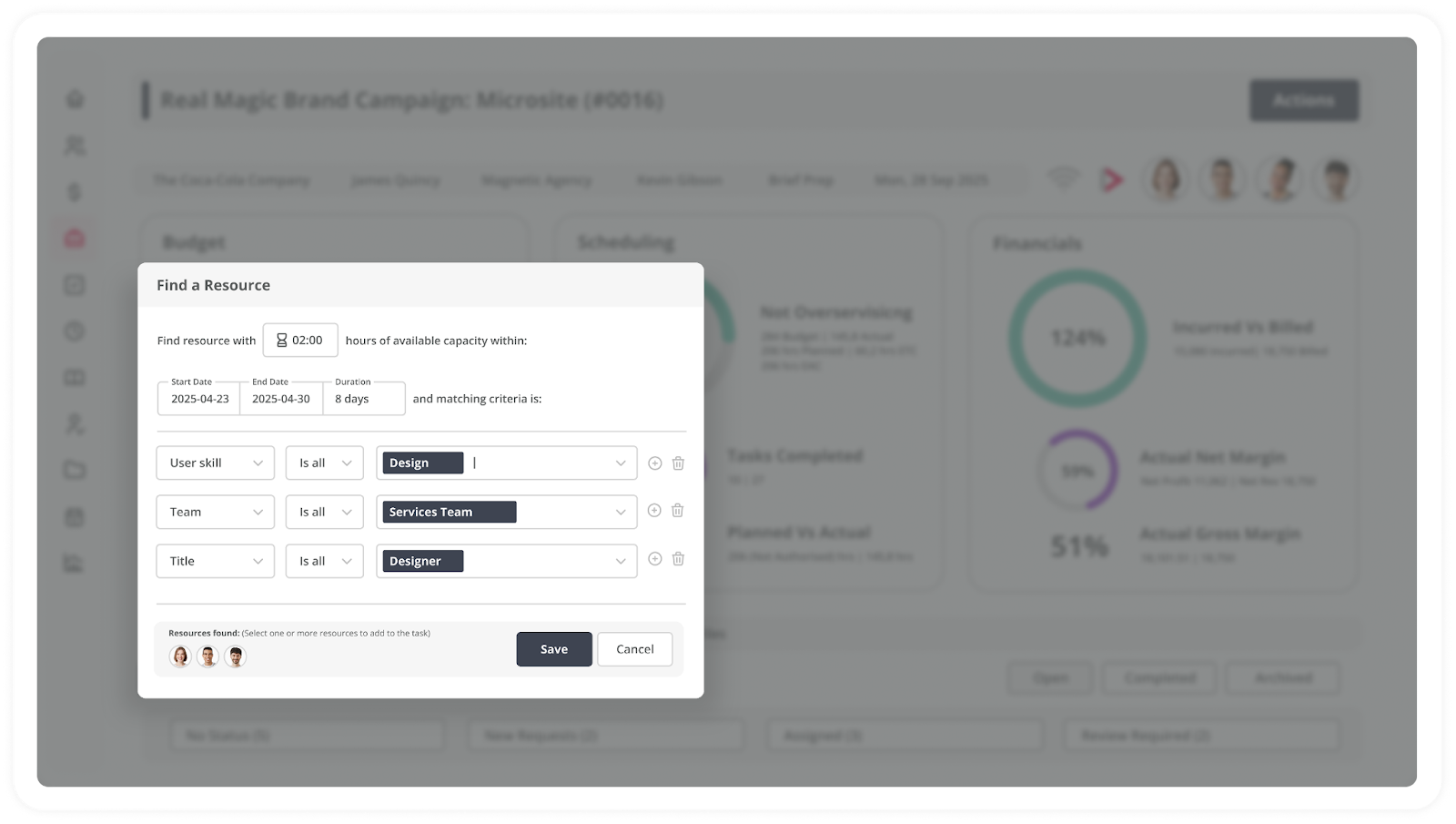
Financial control is the primary governance layer for every successful project. Magnetic tracks estimates, actuals, expenses and gross profitability from the start of the project in real-time and dynamically updates as projects progress. This capability directly supports the monitoring and control lifecycle phase, eliminating the financial clean up after project close and ensures you always have an accurate, up-to-date view of project performance.
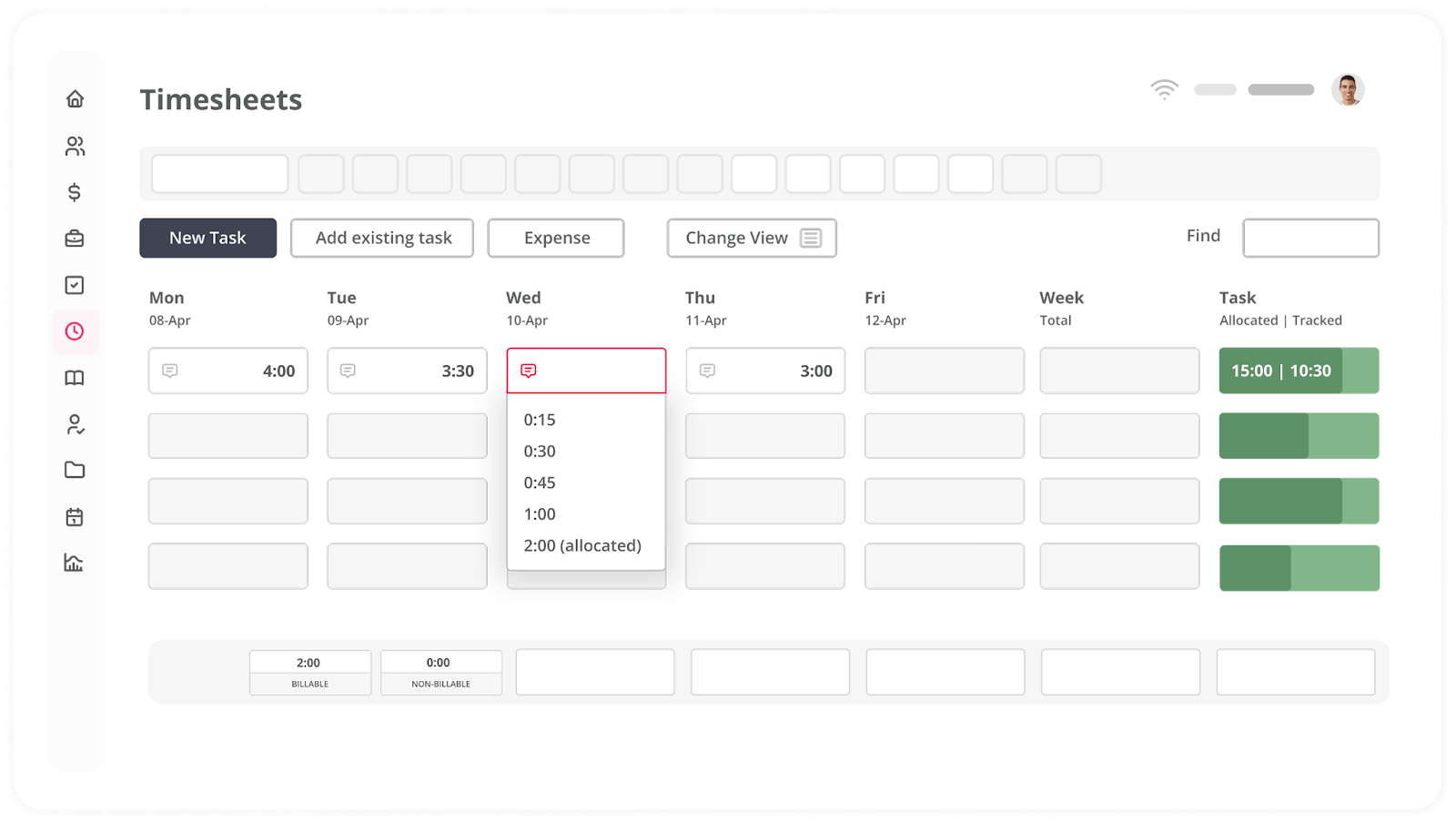
Timesheets are not administrative formality, they are a critical data lever for organisational learning and accurate billing. Magnetic seamlessly integrates time tracking directly with project tasks, providing granular and real-time insight into effort, realised margin and accurate allocation of resources. Magnetic timesheet data enhances the planning phase with realistic capacity metrics, improves billing accuracy and allows leadership to immediately identify and mitigate projects with high effort-to-margin ratios.
Manual, repetitive adminisrative tasks are a significant source of friction that slows down project delivery. Rather than tasking high-value team members with routine follow ups, approvals, status updates and notifications, these can be automated through simple workflows. Automation enforces process integrity, ensuring critical checks and communication are never missed. This eliminates bottlenecks and allows teams to dedicate their time entirely to complete problem-solving and generating client value.

Reporting is often where project managers spend half their week. Magnetic brings everything together in real time so project, resource, and financial insights are available without manual work.
These dashboards help with monitoring, forecasting, and decision making across the entire life cycle,
Get Started with Magnetic
Start a free trial and see Magnetic with your own projects. No credit card required.
Initiation, planning, execution, monitoring and controlling, and closing. These stages give structure to the full flow of a project from initial idea through to project close-out.
There is no fixed rule. Some projects spend more time in planning than in execution. Others move quickly through initiation and slow down during monitoring. Timing depends entirely on the complexity of a project, team size, client involvement and how much is at stake.
A project is well scoped when the time spent on project delivery aligns perfectly with the time costed for in the project initiation phase. If time spent on delivery exceeds the initial estimate, the project has not been scoped correctly.
Magnetic keeps everything in one place. Scope, timelines, tasks, resources, budgets, time tracking and reporting all sit within one unified platform. This creates visibility across all stages and removes the manual admin of managing and switching between multiple disconnected tools.
They give clients a clear view of what happens and when. Each stage has clearly defined decisions, deliverables and responsibilities. This keeps conversations focused and reduces the back-and-forth that creates confusion.
Yes but they don't necessarily need to all be as complex. Even for small or repeat projects, it helps to keep the structure and move through each phase in a less detailed, faster way.
Jenna Green
Head of Growth
at Magnetic
Jenna Green leads marketing at Magnetic. She's worked across agencies, startups, and B2B SaaS, giving her first-hand experience of the operational challenges service firms face.


Magnetic is an all-in-one workflow management platform designed and built for professional services firms.



.svg)