

Project Budget
A Project Budget is the total estimated cost of completing a project, including expenses like resources, materials, and labor.

What is a Project Budget?
A Project Budget is the total estimated cost of completing a project, including expenses like resources, materials, and labor. The budget helps ensure that the project is delivered within the financial constraints set by stakeholders. Creating a strong project budget sets the foundation for project success and ensures financial control throughout the project lifecycle.
When starting a new project, it is crucial to generate accurate cost estimates using historical project data and reliable estimation methods.
A well structured budget incorporates all key project components such as resources, timelines and external costs, providing a clear framework for managing project costs. Creating a project budget involves developing a detailed plan that takes into account all expected expenses and revenue.
Understanding Project Costs
Understanding project costs is key to building reliable project budgets and meeting project objectives. Every expense incurred throughout the project lifecycle, including resourcing costs, material costs for supplies and equipment and indirect costs such as utilities, are considered project costs and must be accounted for. For project managers, accurately forecasting these costs is critical for ensuring the project stays within the allocated budget and meets stakeholder expectations.
A well structured project budget template helps organise and track all project costs. By categorising expenses and linking them to specific tasks or project phases, project managers can get a clear overview of where resources are being allocated. This level of detail supports more accurate budget planning, allowing project managers to optimise resource allocation and make informed decisions that map directly to the projects scope or goals.
Ultimately, having a deep understanding of project costs empowers project managers to predict challenges, manage risks and deliver projects on time and within budget.
How to manage a project budget and track actual costs
- Create a detailed breakdown of costs including contingencies and unexpected expenses.
- Track spending regularly against budget to ensure you stay within the agreed scope and adjust as needed.
- Generate a budget report to track project performance throughout the project lifecycle.
- Monitor and manage labour costs throughout the project lifecycle to ensure control and accuracy over budget.
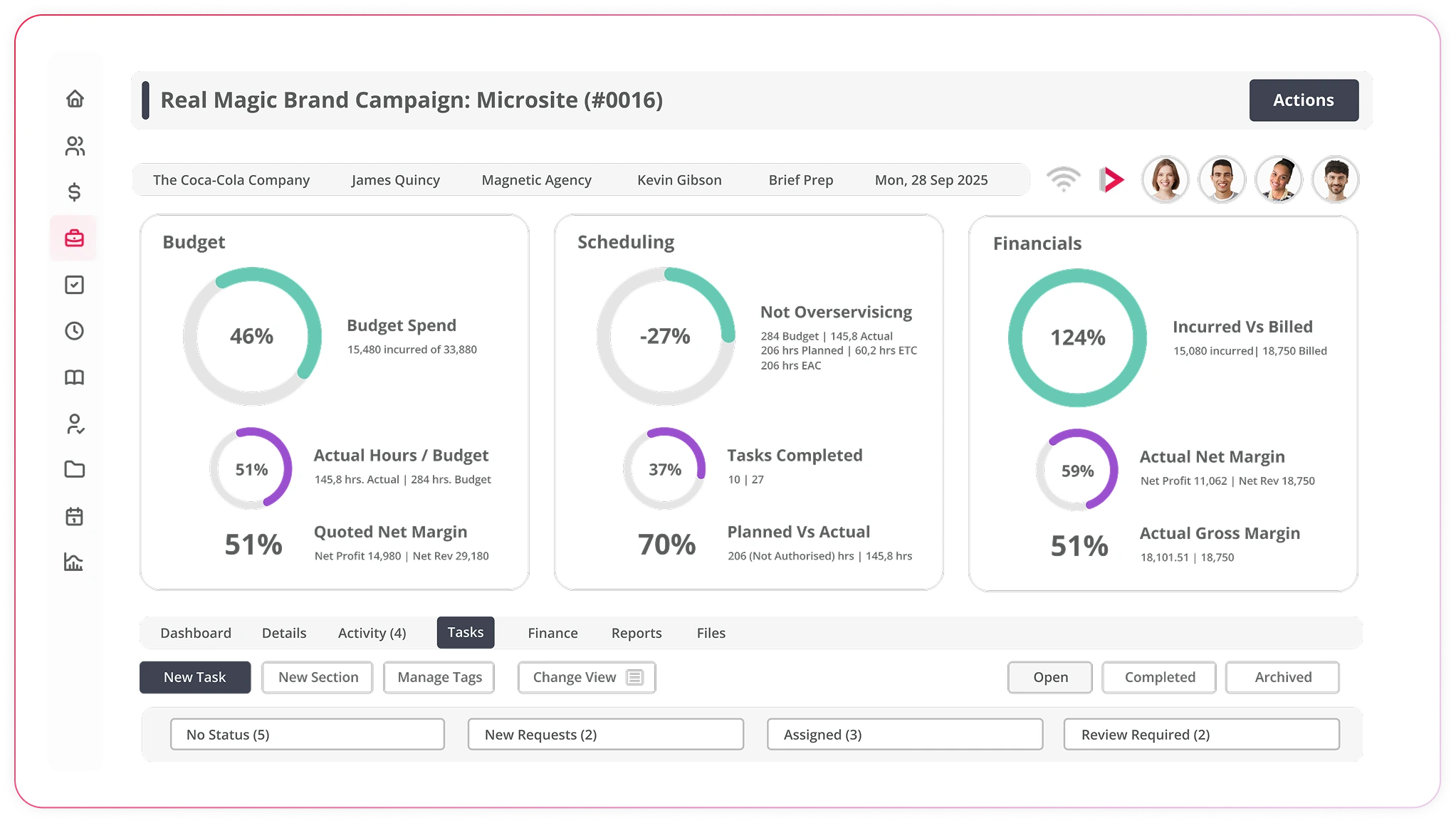
Tip: Use Project Management software like Magnetic to track costs in real-time, making it easier to monitor spending, flag cost over-runs and streamline the project budgeting process in one place.
- Establish control procedures as part of the budgeting process to manage changes and ensure financial control over the course of the project lifecycle.
- Involve project team members in project budget reviews to ensure accuracy and completeness
Monitoring project costs and making adjustments as needed, helps you complete projects successfully and contributes to the overall success of the project. Effectively managing resources and expenses is critical for achieving project success.
Estimating and Cost Management
Estimating and cost management are at the head of successful project budgeting. Project managers reply on proven methods such as bottom-up estimating, where costs are calculated for each individual task and then aggregated and parametric estimating which pulls data from similar projects to predict costs based on key variables. These methods help generate accurate estimates that form the foundation of a comprehensive project budget.
Once the project budget is established, cost management becomes an ongoing process. Project managers should continue to track costs against budgeted costs, with regular budget reviews to uncover any variances. Using a proactive approach such as this, allows for timely correction and helps to control spending that puts cost overruns at risk. By using historical data from past projects, project managers can refine their estimating and cost management practices, resulting in more accurate forecasts and improved budget outcomes for current and future projects.
Effective estimating and cost management not only keeps projects within scoped budget, but also supports improved decision making and accountability throughout the projects lifecycle.
The Link Between Earned Value Analysis and Project Costs
Earned Value Analysis (EVA) is a technique for measuring project performance and ensuring alignment with project budget, specifically in relation to complex projects where multiple moving parts are the norm. EVA compares actual cost of work completed against the budgeted cost of work, providing a clear picture of both cost and schedule performance.
By applying EVA, project managers can quickly uncover variances between planned and actual progress, assess the overall health of a project and make data-backed decisions. EVA is particularly beneficial for complex projects where early detection of cost overruns or schedule delays, can mean the difference between a project succeeding or failing.
Incorporating EVA into the budgeting process helps project managers generate more accurate project budgets, improve cost management and deliver better project outcomes for all stakeholders.
Contingency Planning in Project Budgets
Contingency planning is a core component of any well-structured project budget, especially for more complex projects where unexpected costs ad variances in project scope become common. For project managers putting a strong contingency plan in place, means indentifying potential risks and uncertainties that could threaten a projects financial health and success.
Pinpointing potentials risks that could derail a project, is the first step of effective contingency planning. Analysing project scope, reviewing historical data and consulting with key stakeholders to anticipate potential risks, is key to effective contingency planning. Once risks are identified, project managers must assess their likelihood and the impact of project costs.
To manage risks effectively, project managers should use a project budget template that includes dedicated sections for contingency funds and risk mitigation strategies. Professional Services Automation (PSA) tools, like Magnetic can further streamline this process by providing real-time visibility into actual costs, budgeted costs and overall financial performance.
See How Magnetic Keeps Project Budgets Visible as Work Happens
Start a free trial and see Magnetic with your own projects. No credit card required.